114 Papuan animals confiscated and a month-long race to bring them home.
In February 2026, Indonesian authorities seized 114 wild animals from a smuggling vessel headed for India. This is the story of what happened next.
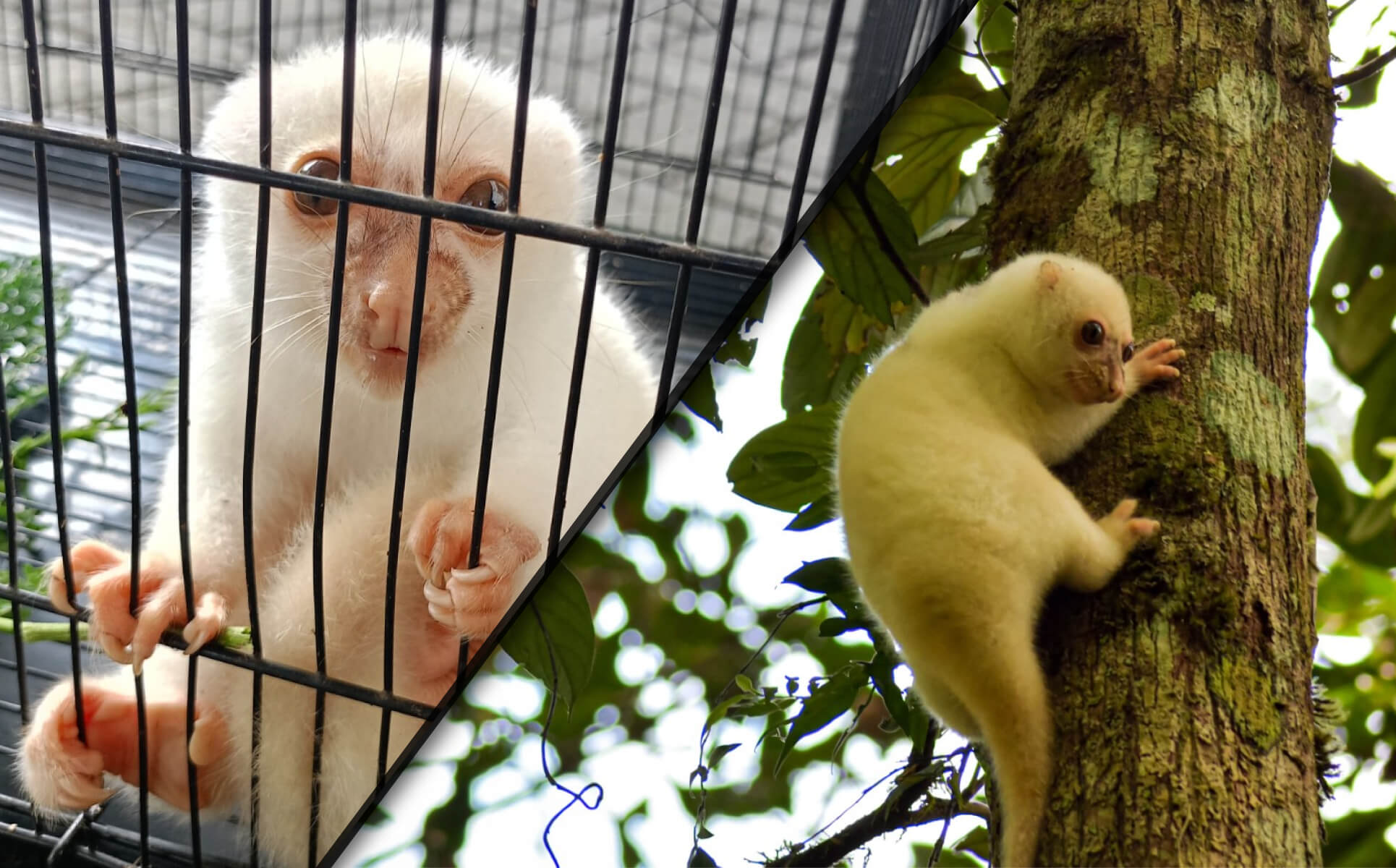
On February 11, 2026 114 animals were confiscated at a vessel heading from Sorong, Papua to Surabaya. There were tree kangaroos being kept inside the cabin toilet, possums were kept in small boxes and all reptiles inside plastic bottles.
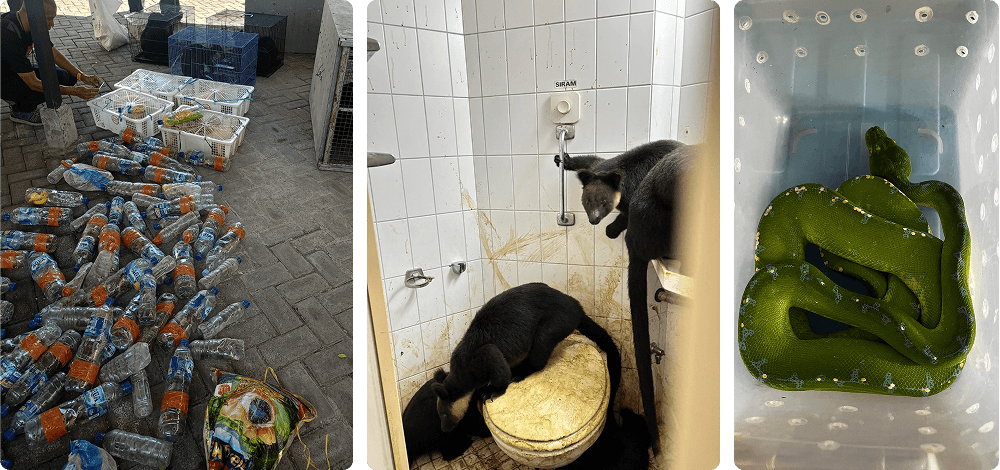
The smugglers were arrested by the BKSDA Conservation authorities in Ternate. After the questioning, it turned out the animals final destination would have been India.
Monday 16 February 2026, veterinarian Adithya Fauzan from JAAN arrived at North Maluku’s Department of Natural Resources in Ternate, where the confiscated animals were being kept. By that time, 14 of the animals already passed away.
114 animals conficated across 11 species. 100 survived.
- Lizards
- 35 Many-lined Sun Skinks: small, shiny-scaled lizards common across Southeast Asia (4 dead)
- 46 New Guinea Forest Dragons: tree-dwelling lizards with a spiny crest, native to Papua's rainforests (8 dead)
- 1 Mangrove Monitor: a large monitor lizard related to the Komodo Dragon, up to 2 metres long
- Snakes
- 1 Northern White-lipped Python: anon-venomous black python from Papua
- 2 Northern White-lipped Pythons (golden form): same species as above, different colour
- 6 Green Tree Pythons (Morelia viridis): a vividly coloured, tree-dwelling python from Papua's rainforests, highly prized in the illegal exotic pet trade and protected under international wildlife law.
- 1 Death Adder: one of New Guinea's most venomous snakes; the only dangerous animal on this list
- Marsupials
- 3 Sulawesi Bear Cuscuses: large, nocturnal tree-dwelling marsupials related to possums
- 2 Northern Common Cuscuses: medium-sized, slow-moving marsupials that feed on leaves and fruit (1 dead)
- 1 Common Spotted Cuscus: a colourful marsupial with distinctive white spots
- 16 Vogelkop Tree Kangaroos:a bear-like kangaroo that lives in the treetops of West Papua; threatened with extinction and found nowhere else on Earth (1 dead)
Upon arrival a medical checkup on all of the animals was done and most of the animals were stressed due to the capturing from their habitat and the unsuitable housing while they’re smuggled.
Some individuals were wounded. Many were severely dehydrated and had diarrhea. The sick animals were treated with medication but sadly none of them survived and they died within the first hours after confiscation. The temporary enclosures that these animals were kept after confiscating were barely enough, so lack of proper facilities was also a serious issue.
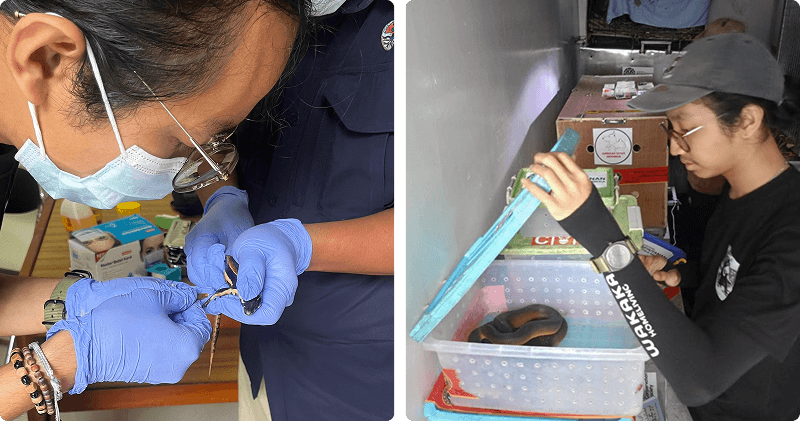
Most of the tree kangaroos were moved into a room with AC so they could roam freely and get the temperature they need, but some individuals were still in outdoor enclosures due to the lack of space in the room. All the cuscus were also moved into a room but they were given enclosures individually and hiding boxes inside the enclosures. Most of the skinks did not survive due to improper enclosures and wrong types of food given the first days after confiscation. It was also difficult to find live mouse for the snakes. The skinks that survived were given vitamin injections, a more suitable enclosure and given the correct food they would eat in their habitat (such as earthworms). Even after all of the changes to their enclosure it’s still the bare minimum due to the lack of resources and facility. The conditions were very challenging.
Regular monitoring and cleaning of the enclosures were done. Every day food around 5-10% of their bodyweight is needed to prevent malnutrition, but sadly it was hard to provide the variety and amount of food that the animals needed. Mostly the kangaroos would only get chayote’s and sweet potato leaves daily, cuscus get fed with guava, banana, papaya, fig and fichus fruit.
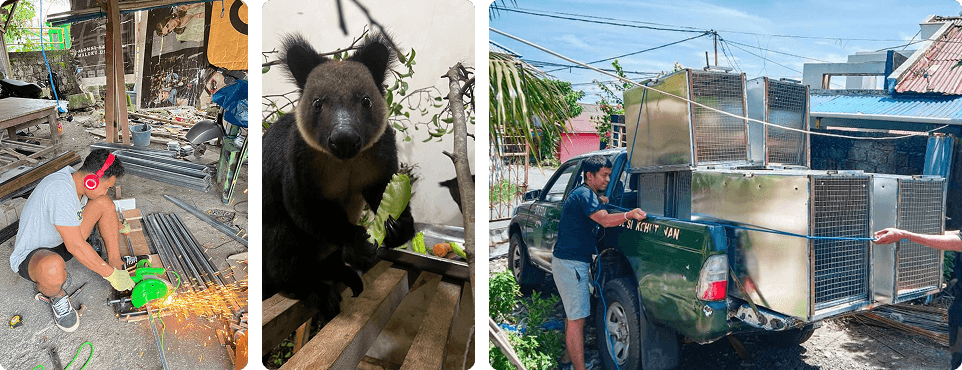
Meanwhile the team prepared transport cages for the cuscus and tree kangaroos for possible repatriation to Papua and held several multi stakeholder meetings, including with the ferryboat management to make sure the animals would be treated well and be provided a special room and our team members would be able to accompany the animals during travel. We purchased mobile AC units to help maintain a proper temperature during travel and in the room so the animals wouldn’t suffer from overheating.
The journey from Ternate to Manokwari took 1 day and 18 hours.
On March 8, 2026, the team departed from Ternate Port at 04:00 WIT, and the animals were placed in a room located in the ship’s hold. In that room, our portable air conditioners were used to maintain the temperature between 21–25°C. During the voyage, the animals underwent routine monitoring, including health checks, room temperature monitoring, behavioral observation, and feeding. The reptiles were soaked and exposed to sunlight in the morning while on the ship.
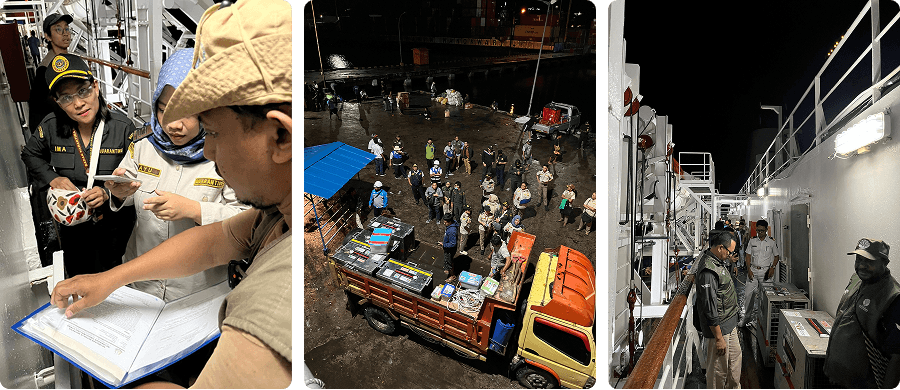
On March 9, 2026, at 22:15WIT, the team arrived at Manokwari Port, and the animals briefly stopped at the BKSDA West Papua office for feeding and a check up before continuing the journey to the release site at 00:30 WIT on March 10, 2026.
The release locations were divided into two sites:
• Mammals (tree kangaroos and cuscuses) were to be released in Kwau Village, Arfak Mountains.
• Reptiles were to be released in Mount Meja Nature Tourism Park (TWA Gunung Meja).
Transportation for the mammals to Kwau Village was done with a truck. On March 10, 2026, at 02:00 WIT, the team arrived at the mammal release site in Kwau Village. Upon arrival, the habituation enclosure that had been prepared was found not to meet the required standards, so the team decided to rebuild the habituation enclosure. The construction of the enclosure was carried out by our team with the assistance of local residents of Kwau Village. At 17:00 WIT, the habituation enclosure was completed and the animals (tree kangaroos) were transferred into it. During the habituation period, the animals were monitored every two hours until the time of release.
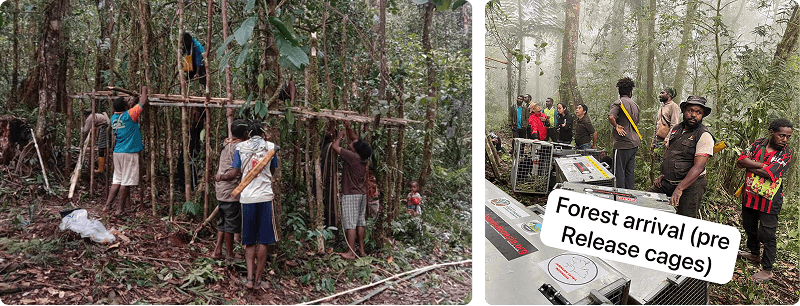
Release back to their home: The Papuan Forest
The release was carried out on March 11, 2026, at 10:00 WIT, beginning with an opening ceremony, welcoming remarks by the governor as he welcomed the animals from Papua back home, and community outreach, followed by the release of the animals (tree kangaroos and cuscuses). The release of the tree kangaroos and cuscus was done in a way to allow the animals to immediately climb the trees.
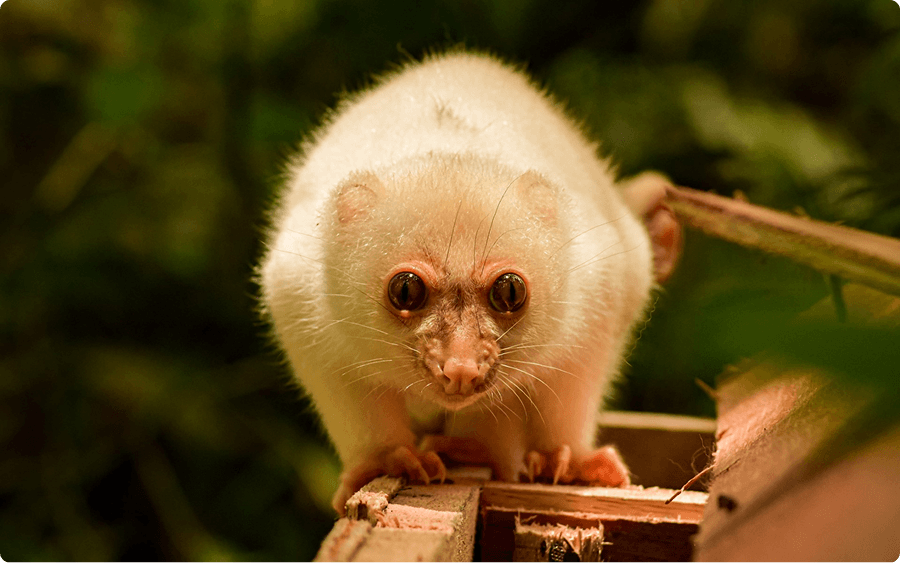
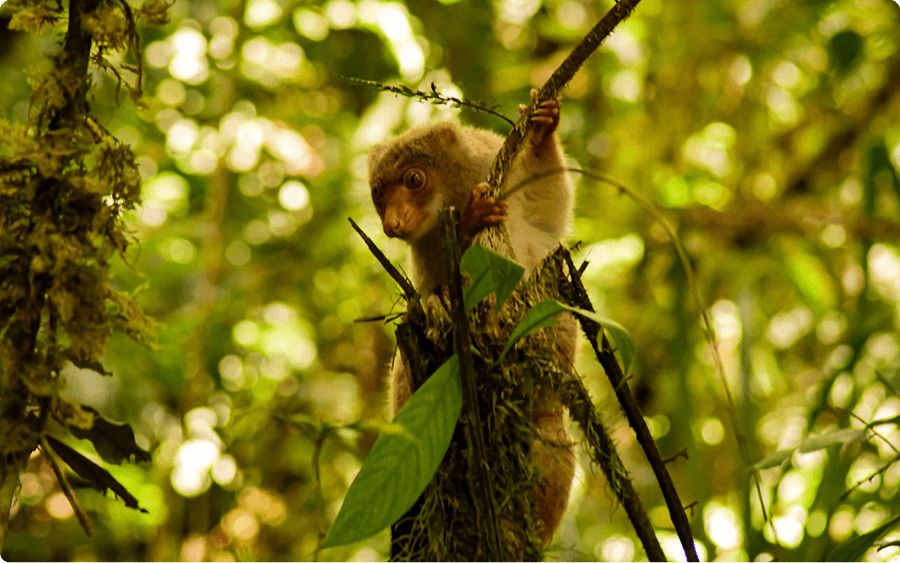
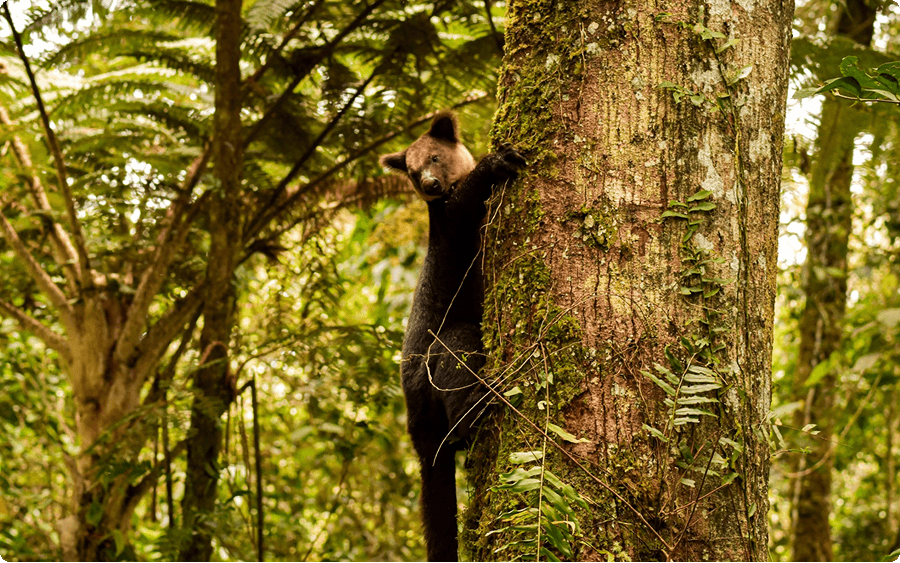
At 13:00 WIT, the team returned to the BKSDA West Papua office to collect the reptiles and proceeded to the reptile release site at TWA Gunung Meja. The team arrived at the location at 15:30 WIT and immediately searched for suitable spots for releasing the animals. Fortunately, no local residents were present, and only the team was there, making the conditions very conducive and more quiet.
For the arboreal species, they were released on different trees, and they were immediately observed climbing up the trees. Meanwhile, the terrestrial species were also seen moving quickly toward freedom after being released
We are very grateful for this amazing collaboration allowing the treatment, repatriation of these unique, endangered and beautiful animals back home.
Get the latest news
Sign-up up for the quarterly newsletter and follow us on Instagram